

I build ARM boards at KiwiPi, and I’ve lived in China long enough that most of the hardware around me is ARM. I’ve also read a fair number of x86 datasheets for customers who needed Windows, so when the ARM-versus-x86 question comes up, I’ve got an answer.
It’s not really CISC versus RISC anymore, that fight is settled anyway. The real choice is software and power.
Origins
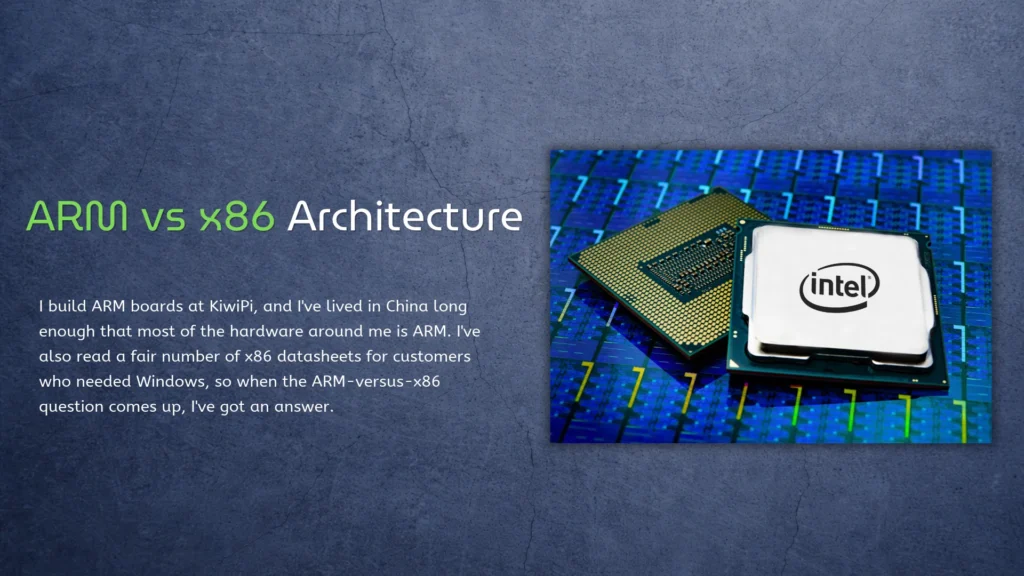
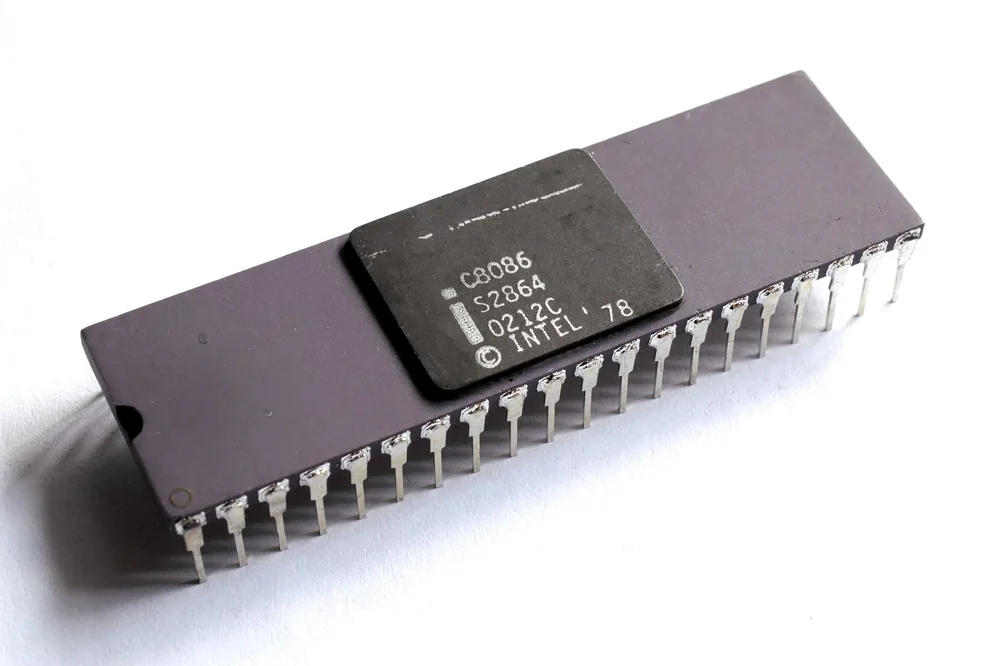
x86 is ancient. The instruction set goes back to 1978, it never broke compatibility, and it still runs inside every Intel and AMD chip. AMD added 64-bit in 2003 as x86-64, and Intel followed.
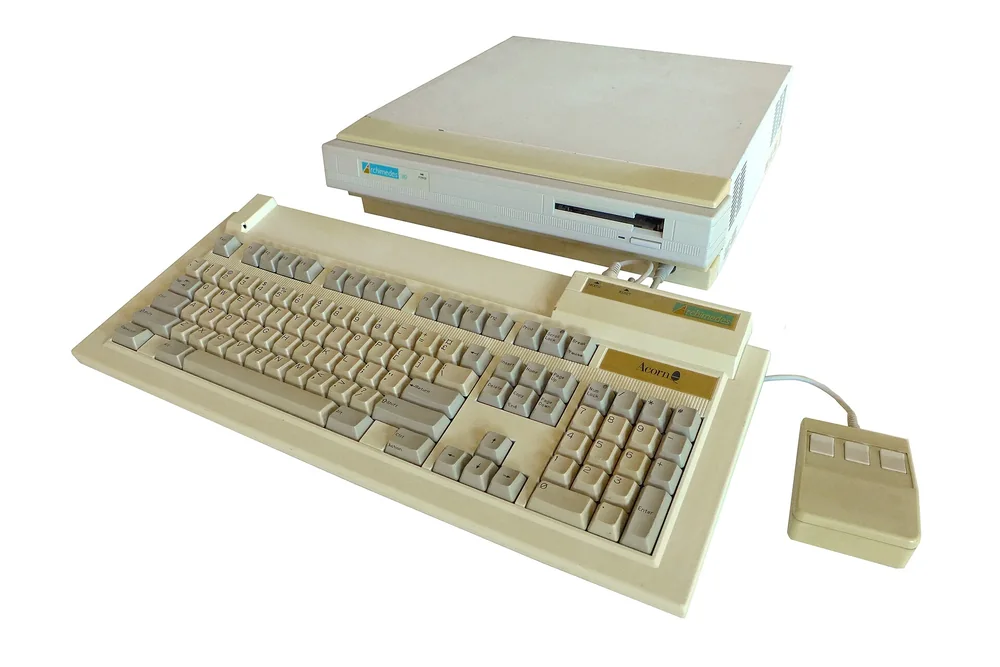
ARM went the other way. A small team in 1985 bet on cheap, low-power silicon for a British desktop, and by 1990 that design was a licensing company. ARM never made chips; it sold the idea, so Apple builds its own, Qualcomm builds its own, and others build their own. Even Rockchip does, following a path from MP3 players to SBCs. AArch64 went 64-bit in 2011, and Apple moved the Mac over in 2020.
Past the hype, the gap is small and concrete. x86 instructions are variable-length, one to fifteen bytes, so an x86 core has to decode them into micro-ops before anything happens… and that eats transistor area and power. AArch64 mostly sticks to fixed 32-bit instructions, so its front end is cheap. There’s no ‘faster’ here, one burns transistors decoding and the other keeps them for the rest of the machine.
Who builds them
Who builds the chip matters more. x86 is Intel and AMD, full stop. ARM is a licensing business with hundreds of companies, so Apple silicon, Qualcomm silicon, and Rockchip silicon all come from the same instruction set. Ten years in China means I mostly see the ARM side, Rockchip and Allwinner and Amlogic, and x86 boards show up mainly when
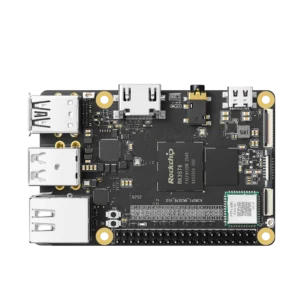
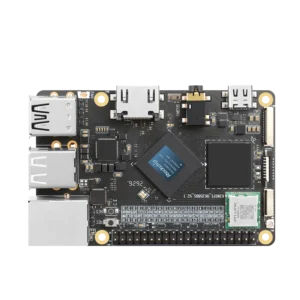
ARM wins on power and integration. A Rockchip RK3588 crams four Cortex-A76 cores, four Cortex-A55 cores, a GPU, an NPU, and an ISP onto one die (the NPU is the bit we lean on). Our KiwiPi 5 Pro runs that chip, and a board around it runs off a small supply with no fan. An x86 desktop part gives you more single-thread speed and better vector math, and wants a big cooler in return. The big.LITTLE split inside ARM is the whole trick: fast cores when you need them, small cores when you don’t.
Software decides
Usually the software decides, not the silicon. Windows x86 and twenty years of legacy binaries only run natively on x86. If your device has to ship any of that, ARM is translation and pain. On the ARM side you’re in the Linux and Android world, and Debian, Ubuntu, and Fedora all publish arm64 images. Your C++ source is rarely the problem, the binaries and drivers are.
Once an ARM board is running Linux, you can SSH into the Linux machine from a Mac to manage it remotely.
Which to pick
Here’s where I land: if you’ve got Windows or years of legacy software to ship, you’re buying x86 and that’s not really a debate. The AAEON UP class and ZimaBoard are the usual boards for it. A Linux gateway, HMI, camera box, or edge-AI appliance, I’d reach for ARM. Our KiwiPi 5 Pro and the other RK3588-class boards sit exactly in that spot, and the ‘ARM is slow’ line is pretty much dead, with Apple’s M-series and the Arm server crowd having closed most of that gap long ago.
The economics stack up too, and a board like the RK3566 or RK3588 already carries its GPU, NPU, ISP. So you’re not bolting on extra chips, and the bill of materials stays low (which matters once you’re shipping thousands), while the x86 equivalent costs more and runs hotter. I got into Suica reader hardware on a Japan trip: those things read a card, blink, open a gate. Tiny ARM-class chip, tiny job.
For most boards the architecture matters less than the software it has to run… and half the time the software picks the architecture for you.
Comparison
| Aspect | x86 | ARM (AArch64) |
| Origins | Intel 8086 (1978), x86-64 from AMD (2003) | Acorn RISC Machine (1985), Arm Ltd (1990), AArch64 (2011) |
| Instruction encoding | variable-length, 1–15 bytes | mostly fixed 32-bit |
| Who builds it | Intel, AMD (plus VIA/Zhaoxin) | Arm licenses to many vendors |
| Power and integration | higher power, desktop/server | SoC-first, low idle power |
| Software | Windows, legacy x86, hypervisors native | Linux, Android, arm64 images |
| Typical board | AAEON UP class, ZimaBoard | RK3588/RK3566 boards, KiwiPi 5 Pro |
FAQ
What is the difference between ARM and x86?
Mostly the instruction encoding and who controls the silicon. x86 is variable-length and made by Intel and AMD. ARM stays at fixed 32 bits, and Arm licenses it to basically everyone, which is why it’s in every phone.
Is ARM faster than x86?
Not really. x86 desktop parts win on single-thread speed and vector math. ARM wins on performance-per-watt and integration. Apple’s M-series closed most of the gap.
Which architecture is better for a single-board computer?
ARM, for Linux gateways, HMIs, camera boxes, and edge-AI. x86, if you have to run Windows or old binaries. There’s not much in between.
Can x86 software run on ARM?
Only via translation or emulation. It works sometimes, but it’s slower and breaks on drivers. If you can, run native.
Sources