





Back in 2007, when Apple had just released the first iPhone, a Chinese startup with the unremarkable name Fuzhou Rockchip Electronics was busy making chips for MP4 players. Nobody back then could’ve predicted that 15 years later, their processors would be sitting inside every other single-board computer, with their flagship SoC becoming the main competitor to the Raspberry Pi in the SBC market. But let’s start from the beginning.
Rockchip is a Chinese company founded in 2001 in the city of Fuzhou. Yeah, they’re pretty old-timers in the semiconductor world. The company started out making simple chips for multimedia devices-MP3 players, digital photo frames, cheap tablets. No grand ambitions for world domination. In the early 2000s, it was just one of many Chinese factories trying to grab a piece of the growing consumer electronics market.
Funny thing-the company’s journey pretty much mirrors China’s own development path. From making fairly cheap goods to globally recognized technology. It’s amazing how far China has come in just 20 short years.
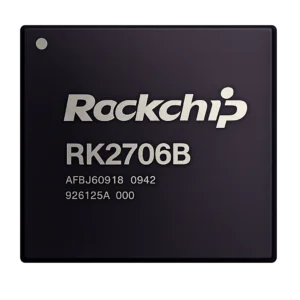
By the way, Rockchip isn’t just about processors for powerful single-board computers-they’ve got a whole history with budget chips too. Like that chip in your first media player? That’s the legendary RK2706B, which was inside practically every other MP4 player in the late 2000s.
First Steps: The ARM9 and DSP Era
The first truly noteworthy chip was the RK26xx, built around an ARM9 core with an additional DSP core for hardware video decoding. Compared to competitors like Actions Semiconductor, Rockchip offered a unique trick – their chips could decode video in hardware without requiring users to convert files into a specific format first. For users, this meant you could just copy a movie onto your player and watch it, no hours-long conversion process required.
In 2008, the Rockchip RK2706B came out (think of it as a bug-fix release). This chip became ubiquitous in Chinese video players, as they were called back then. With support for 480×272 screens and the RMVB format, it conquered the budget portable electronics market in China. If you had a Ritmix, Teclast, or Chuwi player between 2008-2010, there was a 90% chance it had an RK2706B inside. It’s still alive today – a couple years ago I found my old Ritmix with this chip. Fired right up, still works, still displays that soft, blurry picture. A true legend.
The Tablet Transition: RK2918 and the Android Era
In 2010, when Android tablets started taking over the market, Rockchip introduced the RK2918 – their first chip with Android 2.3 support and 2D/3D graphics acceleration through the Vivante GC800 GPU. This marked the transition from player-grade chips to more versatile SoCs. The RK2918 kicked off the era of cheap Chinese tablets that flooded AliExpress and local electronics markets. A tablet with an RK2918 cost about $100, while an iPad would set you back $500+. Quality was so-so, but price was king.
In 2012, the RK3066 launched – a dual-core Cortex-A9 with a Mali-400 MP4 GPU. This was a real breakthrough. Tablets running the RK3066 could already handle games like GTA III, and performance-wise, they were catching up to the Samsung Galaxy Tab 2. Chinese OEMs were churning out these tablets by the tens of millions. This is when Rockchip really started being associated with cheap and cheerful.
The Quad-Core Era: RK3188 and RK3288
In 2013, Rockchip released the RK3188 – the world’s first quad-core Cortex-A9 built on a 28nm process. This was a shot across the bow at their competitors. Tablets with the RK3188 ran snappily, supported 1080p video, and cost next to nothing. Around this time, Rockchip also started pushing harder into Western markets, landing contracts with Asus, Acer, and other major brands.
In 2014, the RK3288 came out – the first chip to support 4K H.265 decoding, featuring a Mali-T760 MP4 GPU. This chip even ended up in Chromebooks and Android TV boxes. But the real star was the RK3399, released in 2016. 6 cores: two big Cortex-A72s (up to 2.0 GHz) and four little Cortex-A53s. Graphics were handled by a Mali-T860 MP4. Support for 4K, USB 3.0, PCIe. For its time, this thing was an absolute beast.
The RK3399 kicked off the single-board computer boom on Rockchip chips, which started offering a real alternative to the Raspberry Pi. Remember the Orange Pi 4? Firefly? All powered by RK3399. And yes, this chip is where the era of powerful single-board computers truly began. If you’ve got an older SBC lying around, there’s a 70% chance this is the chip inside.
The Prime: RK3588 and SBC Dominance
In 2022, Rockchip released the RK3588 – an 8-core monster built on an 8nm process. 4x Cortex-A76 (up to 2.4 GHz) + 4x Cortex-A55. Mali-G610 MP4 graphics. NPU rated at 6 TOPS. Support for 8K video, PCIe 3.0, and dual 2.5GbE ports on some boards. This wasn’t just an upgrade – it was a leap into a different dimension.
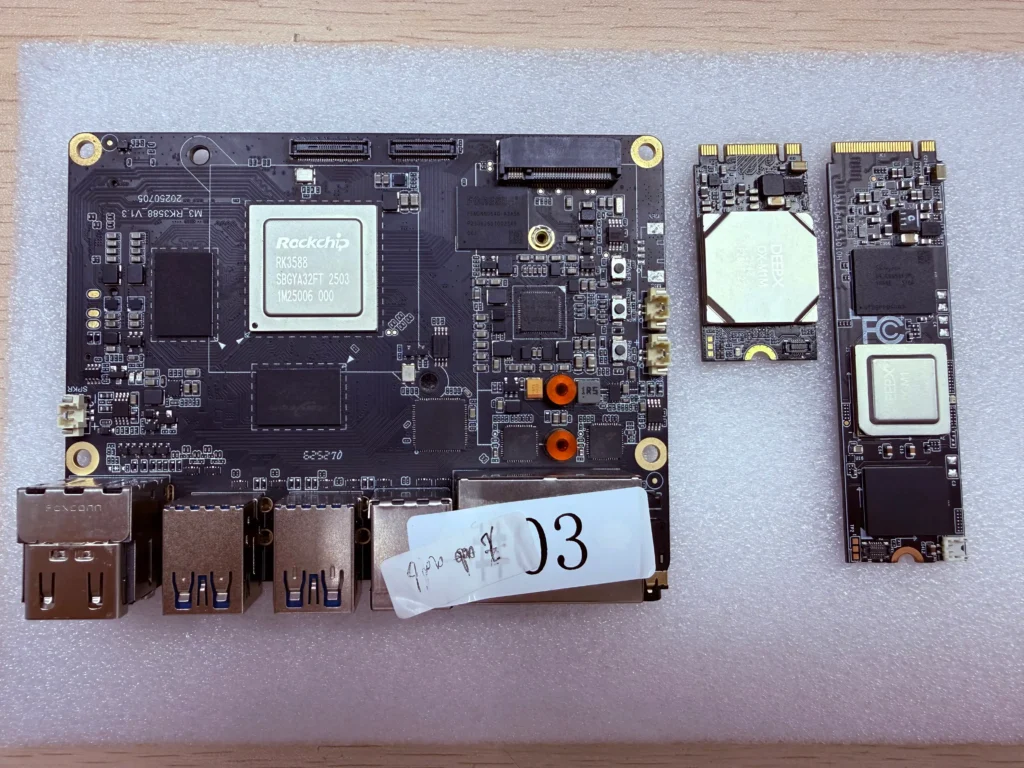
We’ve already covered the RK3588’s specs and features in a separate article, but to keep it short – this chip became the foundation for dozens of SBCs: Orange Pi 5, Radxa ROCK 5B, Banana Pi BPI-M7, and of course, our own KiwiPi 5B (and other single-board computers in this family). Why did everyone fall in love with this chip? The price (boards start at an accessible $80), the performance (it can handle PS2 emulation and run local neural networks), and solid Linux support. Even 4 years after its release, the RK3588 remains the undisputed king of the SBC market.
There’s also a cut-down version of the RK3588, by the way. If you’re curious about the differences between the RK3588 and the RK3588S, we’ve covered that too. Spoiler: the S-version is cheaper, but comes with fewer PCIe lanes and less memory bandwidth.
The Future: RK3688 and What’s Next
But Rockchip isn’t resting on its laurels. The RK3688 has already been announced as the next flagship. Rumors suggest it’ll pack 12 cores, an NPU pushing 20-30 TOPS, and support for LPDDR5X memory. This isn’t just another SBC chip – it’s shaping up to be a genuine competitor to the NVIDIA Jetson Orin. What we know about the new Rockchip flagship RK3688 is still limited, but even from the leaks, it’s clear: this thing is going to be an absolute monster. If the RK3588 is the king of today, the RK3688 is the king of tomorrow.
The Bottom Line
Rockchip has come an incredibly long way – from chips for MP3 players to processors that end up in servers and Edge AI boxes. They didn’t reinvent the wheel – they took ARM cores, added their own glue logic, drove down production costs, and flooded the market. Sometimes quality suffered, but the price was always killer.
And now, when you buy a single-board computer with an RK3588, you’re holding a product from a company that started its journey with a chip that could barely handle 480p video. Quite a journey, huh?
FAQ
When was Rockchip founded?
In 2001, in Fuzhou, China.
What was Rockchip’s first mass-market chip?
The RK26xx – an ARM9 with a DSP for video decoding.
What’s the RK2706B and why is it legendary?
This chip was inside practically every other MP4 player in the late 2000s. It could play RMVB files without transcoding, which was a rare feature back then.
Which chip made Rockchip popular in the West?
The RK3066 (2012) – a dual-core Cortex-A9 that shipped in millions of cheap tablets.
Why is the RK3399 an important chip in the company’s history?
It was the first powerful 6-core SoC (2016), kicking off the single-board computer boom on Rockchip and offering real competition to the Raspberry Pi.
What’s Rockchip’s current flagship?
The Rockchip RK3588 (2022) – 8 cores, 6 TOPS NPU, 8K video, PCIe 3.0. Still the king of the SBC market today.
What’s next?
The RK3688 has been announced – 12 cores, NPU up to 30 TOPS, LPDDR5X. Expected in 2026-2027.
By the way, our Kiwipi 5 with Rockchip RK3588S was tested for PS1 emulation on Linux. If you want to know how to install, let’s go!
Sources:
Rockchip Official Website (English)
Rockchip: From MP3 Players to Modern SBCs (Russian)
RK3588 Product Page (English)
Rockchip Datasheet (English)