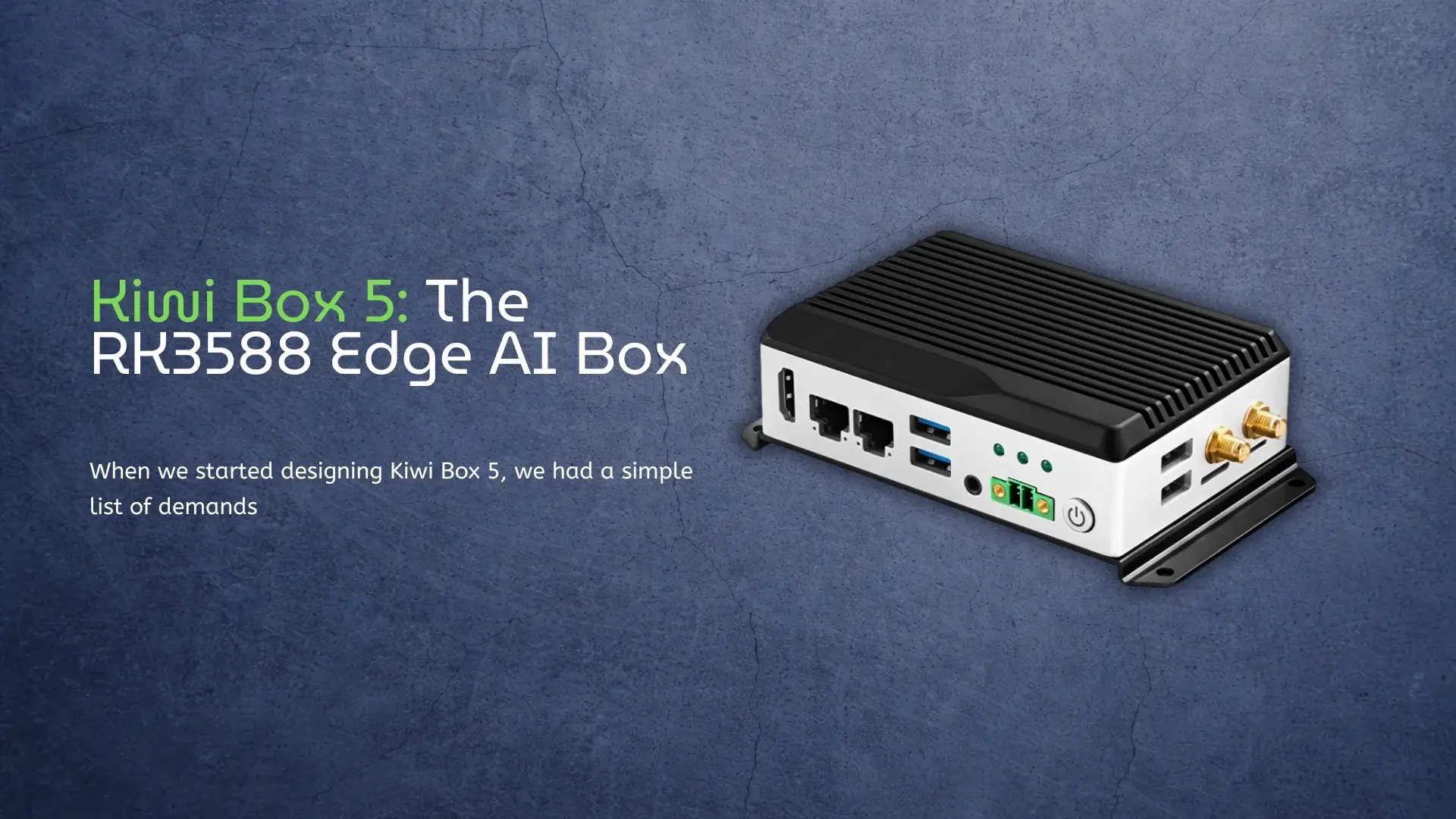
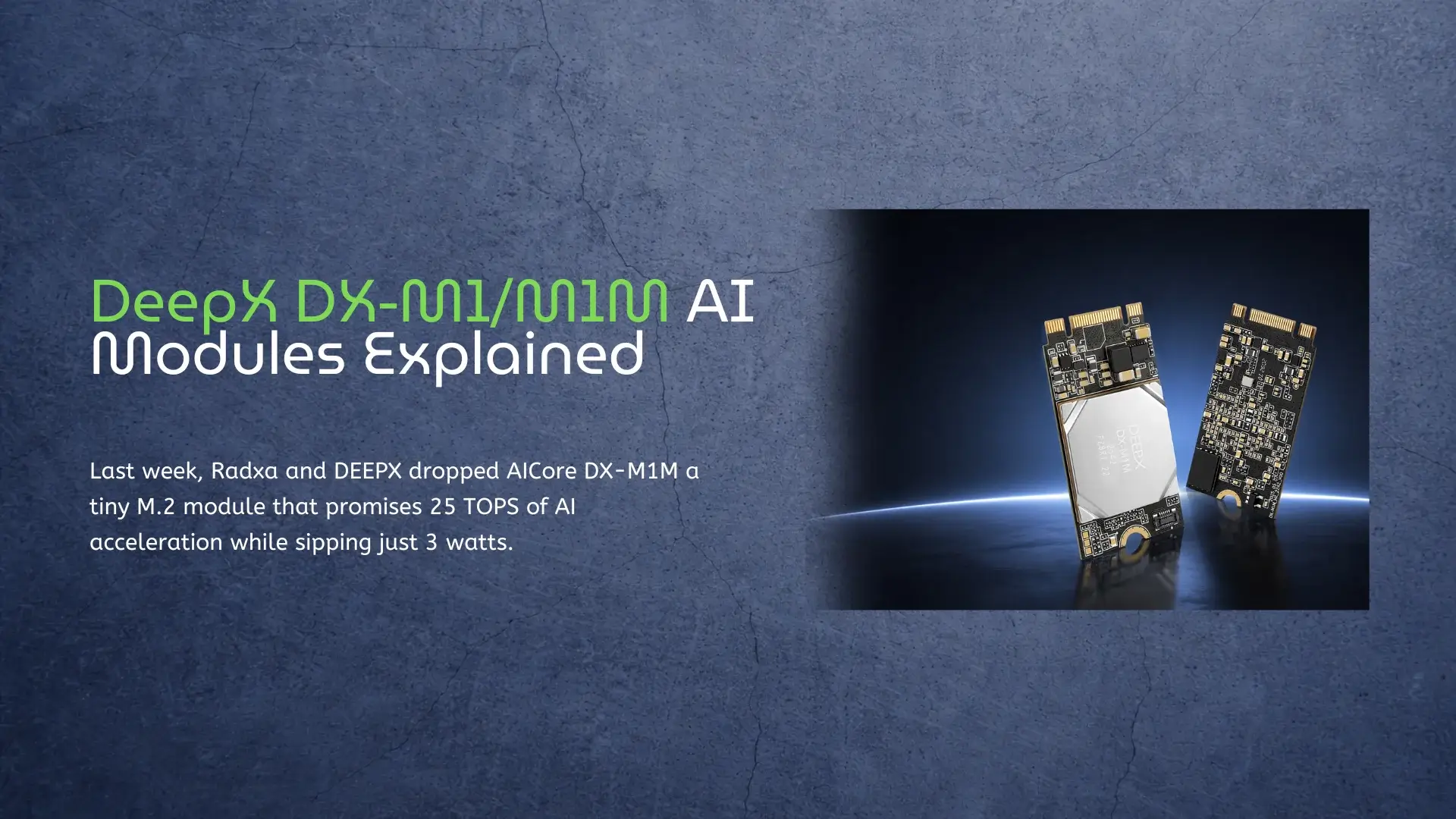
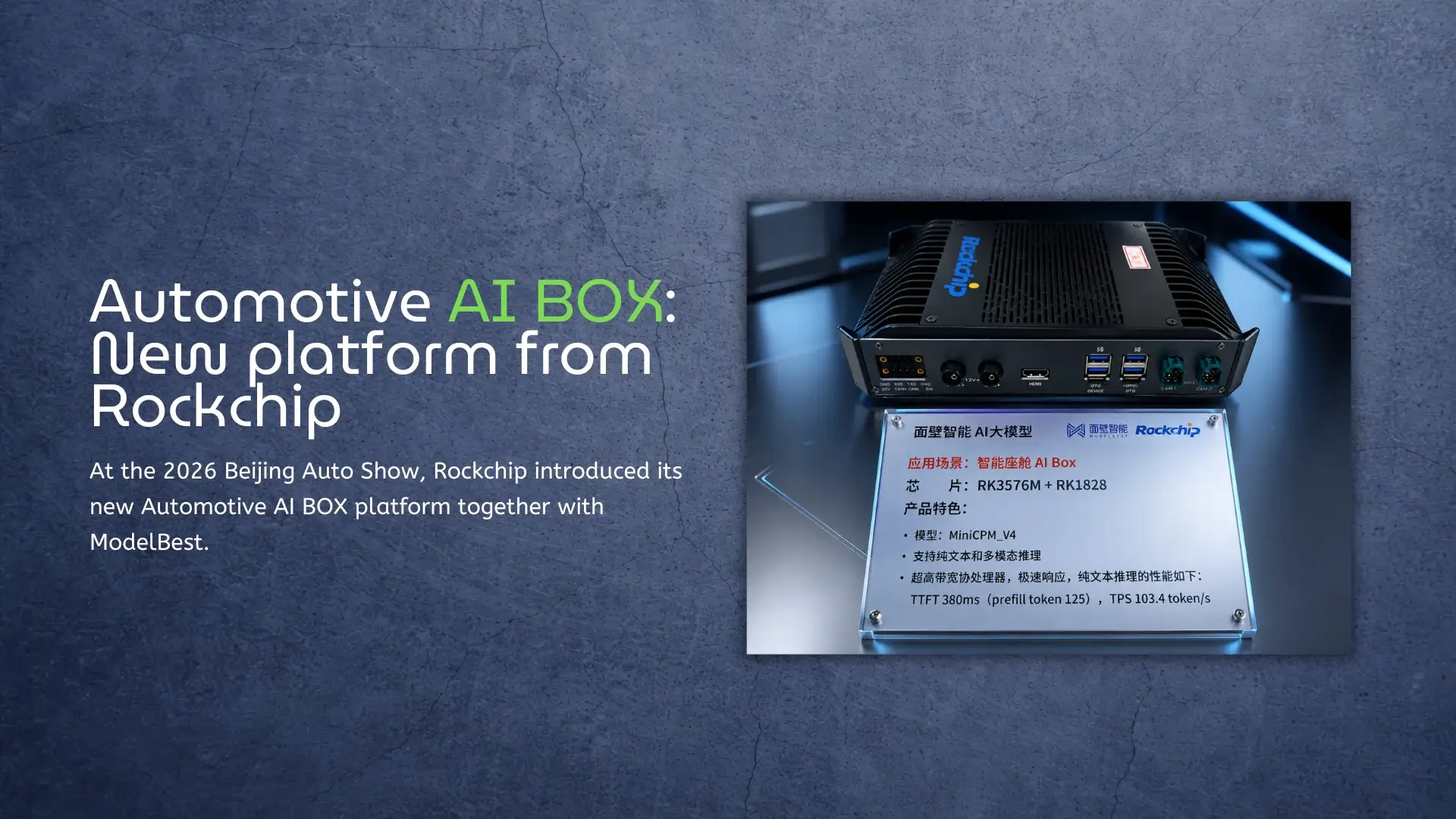
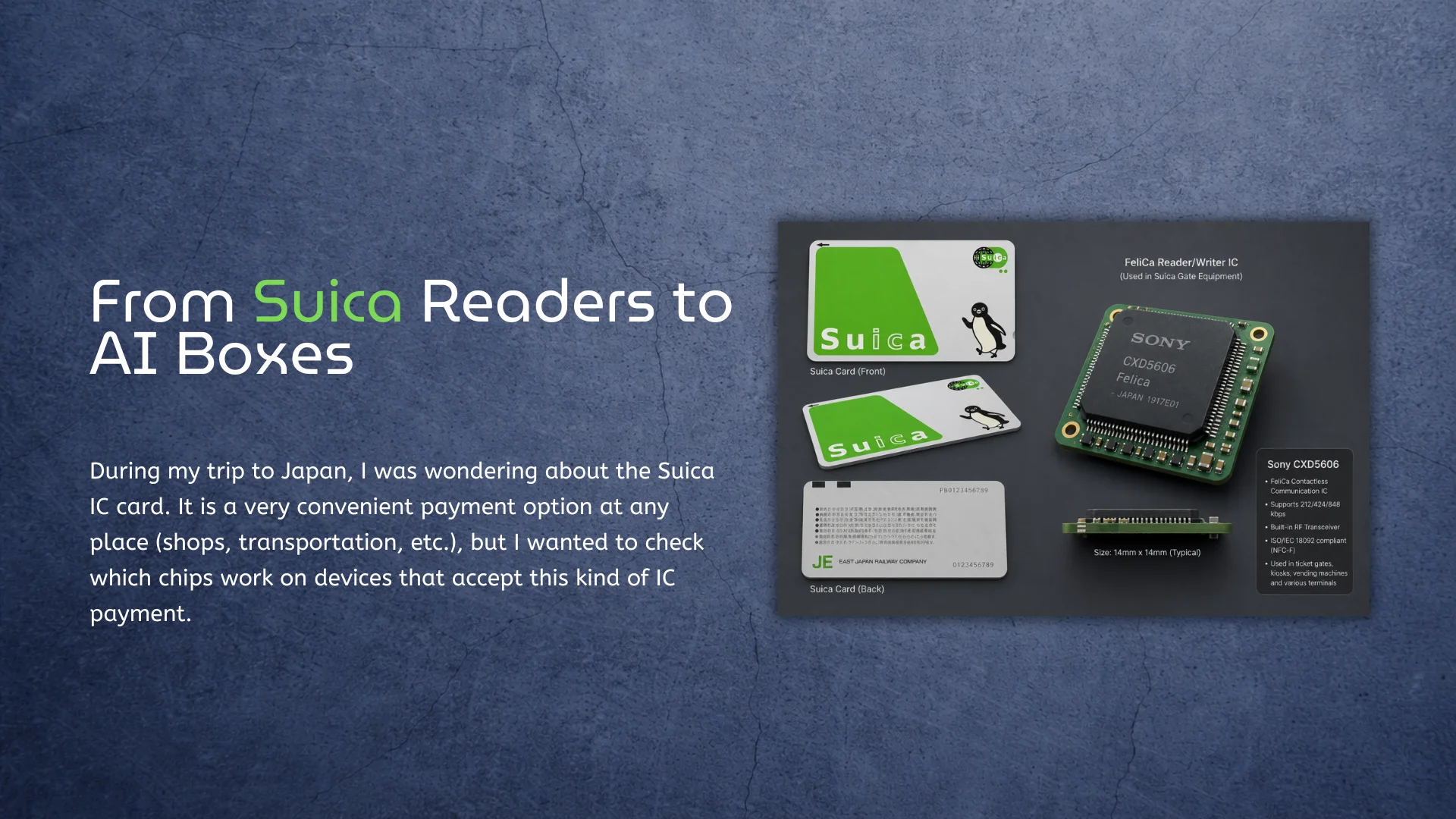
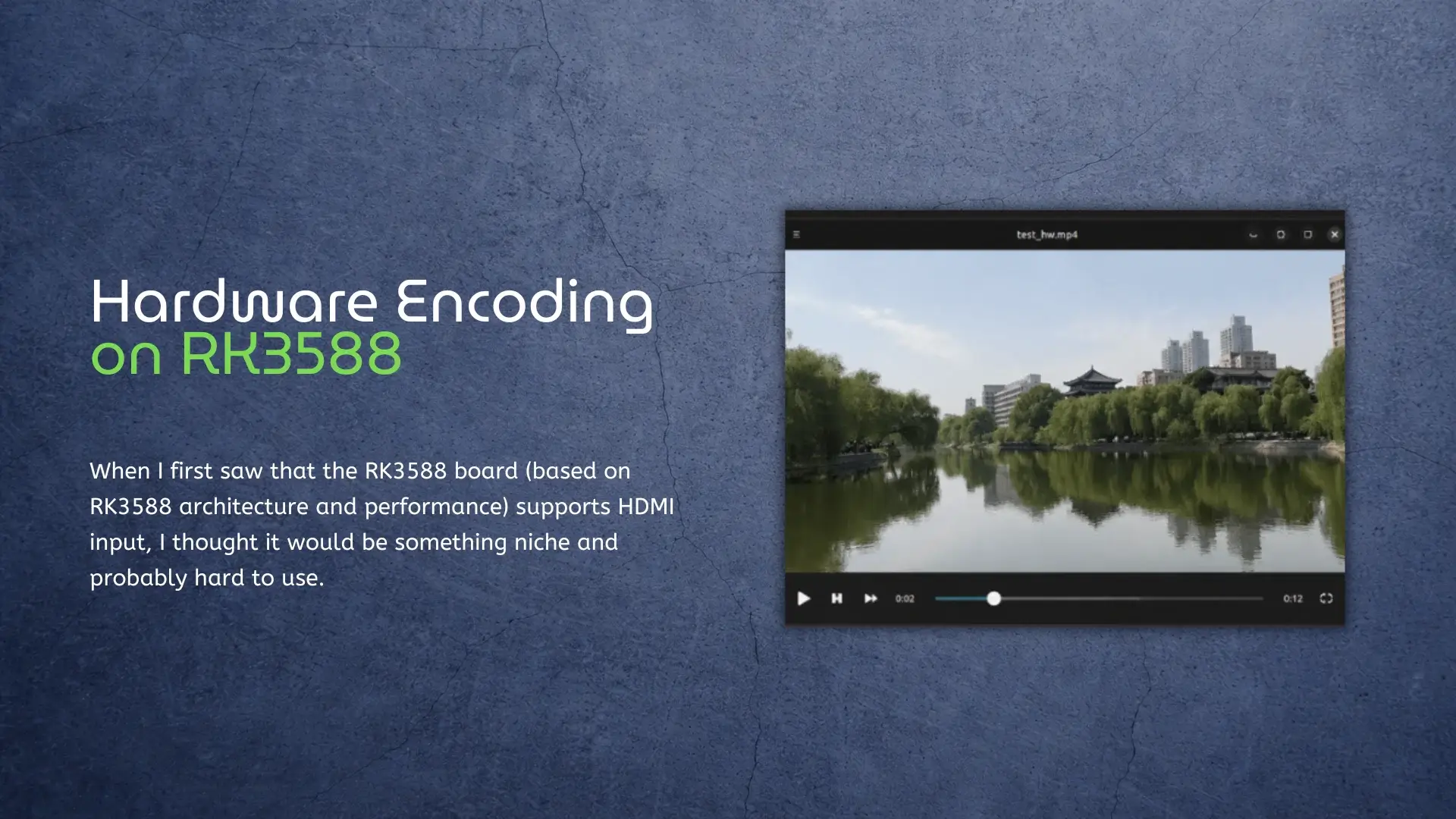
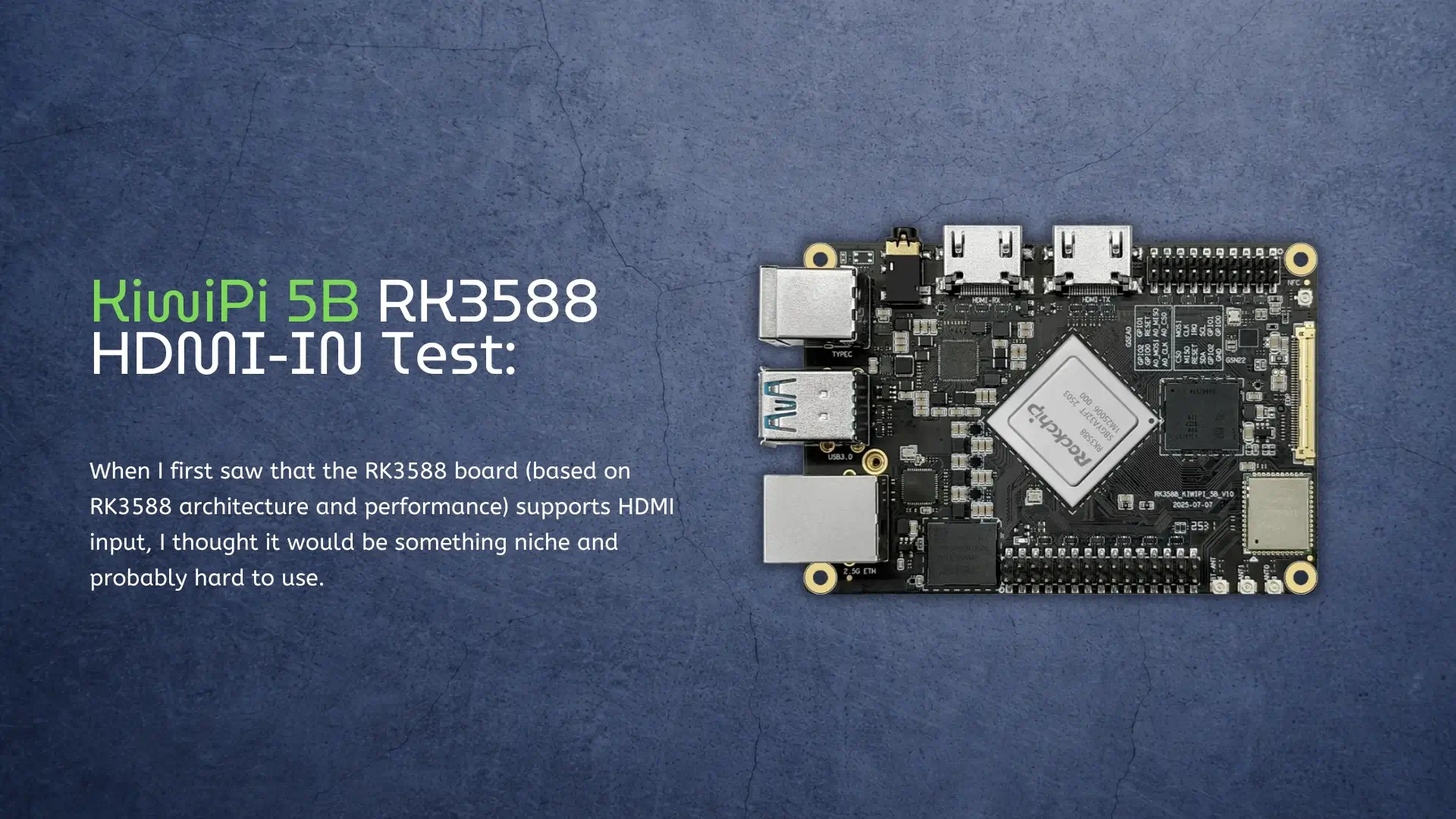
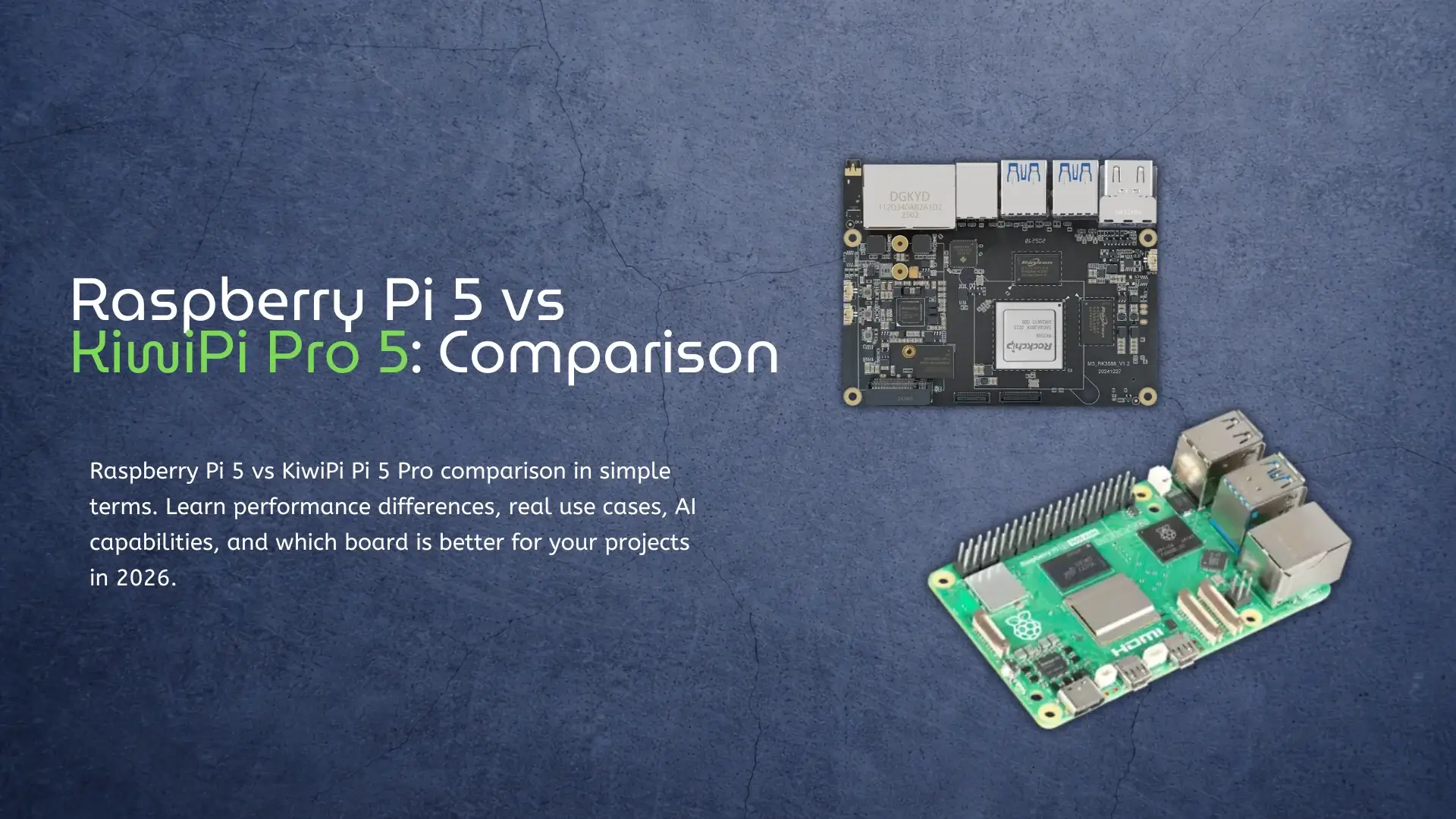
All Comparison AI KiwiPi Series Others Benchmark Test Introducing Kiwi Box 5: The RK3588 Edge AI BoxWhen we started designing Kiwi Box 5, we had a simple list of demands. Build a computer around the Rockchip RK3588. Add everything that Edge AI Box users are always missing, and don’t turn it into an overheating toy. We looked at the market for industrial and hobbyist single-board computers and compact mini PCs. We saw users dealing with USB hubs, living with a single Ethernet port, and praying their power connector wouldn’t fall out at the worst possible moment. So we built Kiwi Box 5. This is not just another RK3588 box; this is a finished device for real tasks. Kiwi Box 5: Our new Edge AI Box At the heart of Kiwi Box 5 lies the Rockchip RK3588. If you want a deep dive into what this chip can do, we have prepared a complete RK3588 specs and performance guide. Quick facts: 8 cores: 4x Cortex-A76 at 2.2GHz plus 4x Cortex-A55 at 1.8GHz, 8nm process Mali-G610 MC4 graphics with Vulkan 1.2 and OpenCL 2.0 support Triple-core NPU delivering 6 TOPS for on-device AI, no cloud needed We did not cut corners on memory. The standard config is 8GB LPDDR4X (options for 4, 16, or 32GB) and 128GB eMMC June 9, 2026 AI, KiwiPi Series DeepX DX-M1/M1M AI Modules ExplainedLast week, Radxa and DEEPX dropped AICore DX-M1M a tiny M.2 module that promises 25 TOPS of AI acceleration while sipping just 3 watts. Remember the AI accelerators that turned out to be glorified USB sticks with half-baked drivers? Yeah. But this thing? It fits in your M.2 slot, like an NVMe drive. And it claims to run YOLO, ResNet, pose estimation – the whole nine yards, without melting your motherboard. Wait, What Actually Is This Thing? DeepX is a South Korean AI chip startup, Radxa – the folks behind the ROCK series SBCs – is partnering with them to put this NPU into an M.2 package. The original AICore DX-M1 AI Module launched in late 2025. That was a bigger M.2 2280 card with PCIe Gen3 ×4, 4GB of LPDDR5, and a 3-5W power envelope. Respectable, but bulky. The new DX-M1M AI Module is different: smaller, leaner. Meaner in some ways, weaker in others. Feature DeepX DX-M1 (original) DeepX DX-M1M (new) AI Performance Up to 25 TOPS Up to 25 TOPS Form Factor M.2 2280 M.2 2242 (M + B Key) Interface PCIe Gen3 ×4 PCIe Gen3 ×2 Memory 4GB LPDDR5 1GB LPDDR4X (4266 MT/s) Storage ? 1Gbit QSPI May 27, 2026 AI, Others Hardware Video Encoding: 100 Hours LaterIn the last article, I talked about RK3588 hardware video encoding. This time, I wanted to go deeper after spending more than 100 hours testing different pipelines on the KiwiPi 5B SBC.Now let me tell you about the parts they don’t put in the shiny marketing slides. Because yeah, hardware encoding works. When it works. But getting there? Buckle up. The First Crash (And The Second, And The Third) I’ll be honest – my first mpph264enc pipeline crashed within 30 seconds. Not even kidding. The error? Something like mpp_enc: failed to allocate buffer. No explanation. No helpful hint. Just… death. After hours of forum crawling and staring at kernel logs like a confused raccoon, I found the culprit: memory pressure. See, the VPU needs contiguous DMA buffers. If your system has been running for a while and RAM is fragmented, the allocation just fails. No graceful fallback. Just a crash. The fix? Reboot. Or pre-allocate buffers like a paranoid sysadmin. I chose the reboot method because I’m lazy and this was a test bench, not a production jet engine. But this taught me something important: hardware encoding is powerful, but fragile. You can’t just hammer it like a software encoder May 22, 2026 KiwiPi Series, Benchmark Test Automotive AI BOX: A New Platform from RockchipAt the 2026 Beijing Auto Show, Rockchip introduced its new Automotive AI BOX platform together with ModelBest. The goal is simple – to bring large AI models into the car without depending too much on the network. This is not just another automotive demo; it also shows how embedded AI hardware is changing across many industries. The same ideas behind smart cockpit AI can also be used in robotics, kiosks, AI terminals, edge video systems, and embedded Linux devices. Why Automotive AI BOX Is Moving to the Edge Rockchip’s new Automotive AI BOX tries to solve this problem with a dedicated AI compute system inside the vehicle. According to the company, the platform is designed for multimodal AI workloads and local large model inference. That matters because modern in-car AI is no longer only voice commands. New systems process video, audio, driver behavior, navigation data, and even cabin monitoring at the same time. This trend is very similar to what we already see in edge AI hardware based on Rockchip RK3588 platforms. Devices powered by RK3588 are already handling local video processing, AI acceleration, and multimedia workloads without relying heavily on remote servers. Custom ODM/OEM Solutions If you’re developing an May 20, 2026 AI, Others Suica Readers: The Hidden HardwareDuring my trip to Japan, I was wondering about the Suica IC card (FeliCa NFC). It is a very convenient payment option at any place (shops, transportation, etc.), but I wanted to check which chips work on devices that accept this kind of IC payment. And honestly, if you’ve ever seen Tokyo stations during rush hour, you know these systems can’t afford to be slow even for a second. Thousands of people are constantly moving through the gates. If every person had to wait even half a second longer, the whole station would become a traffic jam immediately. It’s Not Just NFC Sony’s FeliCa technology (FeliCa NFC) Most people think Suica is basically the same thing as regular contactless payment. But Japan’s system is a bit different. Suica uses Sony’s FeliCa technology (FeliCa NFC), and the whole thing was built around one idea: people should not stop walking while paying. That was the goal from the beginning. Suica Transaction history in Apple Pay And when you think about it, that’s actually pretty crazy. The gate has to communicate with the card or phone, verify everything, calculate the fare, update the balance, open the gate, show confirmation May 14, 2026 Others Hardware Video Encoding on RK3588After testing HDMI-IN on RK3588 with Kiwipi 5B, I ran into a very simple problem. Recording video work, but CPU usage goes up fast. At first, I was using software for hardware video encoding. It works, but not for long runs or real-time pipelines, so I switched to hardware video encoding. And that’s where the board started to behave completely differently. What Hardware Video Encoding Actually Means Here On RK3588, video encoding is not done by the CPU; there is a dedicated hardware block (VPU). It handles H.264 and H.265 encoding directly. And this is not a small feature. The chip supports real-time encoding up to 8K resolution, which means the encoding is designed to run continuously without loading the CPU. So instead of: CPU doing everything frames getting delayed You get: dedicated pipeline stable throughput much lower CPU usage Switching From Software to Hardware Video Encoding At first, I used something like this: x264enc It works, but CPU usage can easily go above 100%. Then I switched to Rockchip hardware encoding. On RK3588, this usually goes through: MPP (Media Process Platform) or hardware-enabled ffmpeg / gstreamer plugins For example, using GStreamer: gst-launch-1.0 v4l2src device=/dev/video0 ! videoconvert ! mpph264enc ! April 27, 2026 KiwiPi Series, Benchmark Test I Tested HDMI-IN on RK3588Here’s What You Can Actually Do With It When I first saw that the RK3588 board (based on RK3588 architecture and performance) supports HDMI input, I thought it would be something niche and probably hard to use. Most single-board computers don’t even have HDMI-IN, so expectations were not very high. But after testing it on the KiwiPi 5B, I realized it’s actually one of the most interesting features – and also one of the least explained. So I decided to try it myself and see what it can really do in practice. Getting HDMI-IN to Work The setup is surprisingly straightforward. Once the system boots, the HDMI input shows up as a standard video device in Linux, using the V4L2 video interface. In my case, it appeared as: /dev/video0 To confirm it, I ran a quick check in the system, and the HDMI receiver was correctly detected as a video source. At this point, the board is already receiving signal – you just need to access it. HDMI input on RK3588 showing up as /dev/video0 in Linux Checking the Input Signal Before trying anything complex, I wanted to see what kind of signal the board is April 24, 2026 KiwiPi Series, Benchmark Test Raspberry Pi 5 vs KiwiPi 5 ProWhich board should you choose for real projects in 2026 A clear and simple look at Raspberry Pi 5 and KiwiPi Pi 5 Pro performance If you are choosing between Raspberry Pi 5 and KiwiPi 5 Pro, you are really deciding what kind of work you want to do. Both are small computers, but they are built for slightly different purposes. One is simple and widely supported. The other is more powerful and focused on heavy tasks like AI and advanced processing. Raspberry Pi 5 is the most popular option for beginners and hobby projects. It is easy to set up, has a huge community, and works well for learning, coding, and simple servers. KiwiPi 5 Pro, on the other hand, is built around a stronger chip. It is made for people who need more performance, especially for things like AI, video processing, and edge computing. Understanding the basic difference The Raspberry Pi 5 uses a quad-core ARM Cortex-A76 processor. It is fast compared to older Raspberry Pi models, and it handles everyday tasks well. You can browse the web, write code, and run lightweight applications without problems. The KiwiPi 5 Pro uses a much more powerful chip based on April 23, 2026 Comparison, KiwiPi Series How to Mount SDA1 in Raspberry PiIf you are using a Raspberry Pi, sooner or later, you will run into storage devices like USB drives, SSDs, or external hard disks. When you plug one in, it does not always show up automatically the way it does on a normal computer. This is where the idea of mounting comes in. It sounds technical, but it is actually quite simple once you understand it. In this guide, I will explain how to mount sda1 in Raspberry Pi in a very clear and easy way. Think of this like explaining it to a friend who has never used Linux before. No complicated words, no confusing steps, just what you need to know to make it work. If you are setting up storage on Raspberry Pi, it usually means you plan to use it for real tasks like servers or development. If you are working with video or external devices, things can get a bit more interesting. For example, on more powerful boards like RK3588, you can even take HDMI input directly and process it in real time. I tested this setup in practice, and it turned out to be much more useful than expected. If you want to see April 20, 2026 Others RK3588 SBC: KiwiPi 5 Pro vs Rivals If you’ve been looking into small but powerful computers, you’ve probably come across the term RK3588 SBC. It sounds technical, but the idea is actually simple. A single-board computer is just a full computer built onto one small board. You plug in power, storage, and a screen, and it works like a mini PC. The RK3588 is the brain of many of these boards. It’s a chip made by Rockchip, and it’s known for being fast, efficient, and flexible. You’ll find it inside different boards like the KiwiPi 5 Pro and others such as the Rock Pi 5 or similar RK3588-based devices. Let’s break this down in a very simple way and compare how these boards actually feel in real use. What is an RK3588 SBC? An RK3588 SBC is just a small computer powered by the RK3588 chip. That chip has eight CPU cores. Four are fast and handle heavy tasks. Four are slower but save power when you don’t need speed. This helps the system stay cool and efficient. It also has a strong GPU for graphics and video. It can play 4K and even 8K video, which is impressive for such a small board. There is April 14, 2026 KiwiPi Series, Benchmark Test Edge AI Robotics News: Live Updates 2026What Is Edge AI Robotics? If you have been seeing more edge AI robotics news lately, there is a good reason. This field is moving fast, and now it is no longer just about experiments. Real robots are already working in real places. Edge AI robotics means robots can think and make decisions directly on the device (So that is cool). They do not need to send data to the cloud and wait for a response. Everything happens locally (very convenient). This makes them faster and more reliable. Edge AI Robotics Before, many robots depended on cloud systems. They would capture data, send it somewhere, wait, and then act; that works for some tasks, but not for real-time work. If a robot is moving, lifting, or interacting with people, even a small delay can cause problems. That is why edge AI is becoming the standard. It allows robots to react instantly. It also means they can keep working even if the internet is slow or completely unavailable. Latest Edge AI Robotics News: Real Industry Updates in 2026 The biggest change in recent news is simple. Robots are now being used in real jobs, not just tested April 10, 2026 AI RK3588 Simply Explained: Specs & SpeedWhen I first started looking into new single-board computers and AI devices, I kept seeing the Rockchip RK3588 everywhere. At some point it felt like every second board was using it. At first I didn’t pay much attention – just another chip name. But after digging into a few devices and testing some of them, it became pretty obvious why so many companies are building around it. What the Rockchip RK3588 actually is The RK3588 itself is a system-on-chip. In simple terms, it means most of the important parts of a computer are packed into one chip. You don’t have separate pieces for CPU, graphics, and AI – it’s all inside. That’s why devices based on it can stay relatively small and still be pretty capable. If you think about it in a simple way, the RK3588 is like a compact “brain” that can run a full device – whether it’s a mini PC, a smart display, or one of the top 5 AI boxes of 2026. What I found interesting is that it doesn’t really try to specialize in just one thing. Some chips are strong in graphics but weak in AI, others are fine for basic tasks but April 9, 2026 Comparison No posts found 1 2